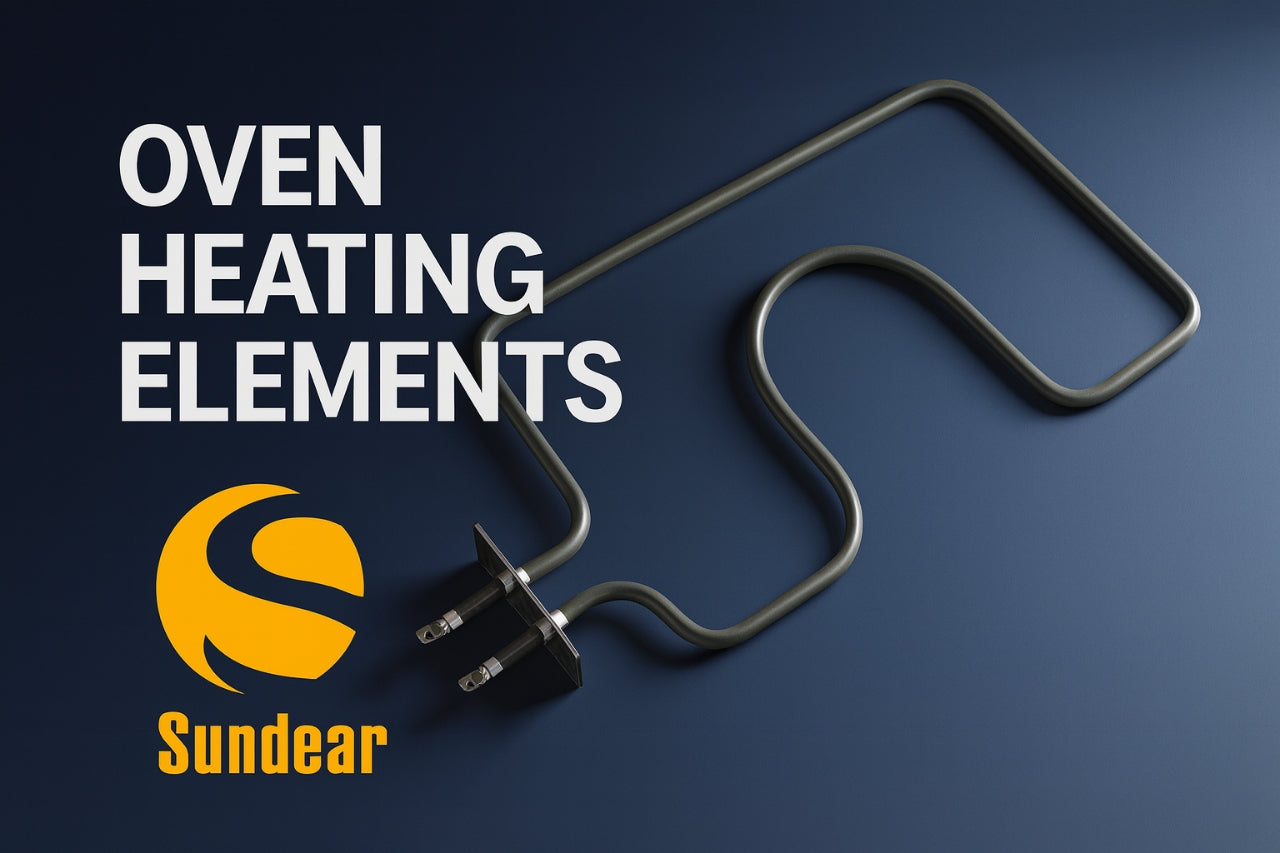
Oven heating tubes are the core thermal components that determine how fast, how evenly, and how efficiently an oven cooks. Whether used in a home kitchen, commercial bakery, or industrial cooking equipment, the heating element directly impacts food quality and energy consumption.
At Sundear Group, we’ve been designing and manufacturing high-performance heating tubes for over 30 years, supplying global OEMs across Europe, North America, Middle East, and Asia. This guide explains the main types of oven heating tubes, how they work, and how to select the right heating element for your oven design.
1. What Is an Oven Heating Tube?
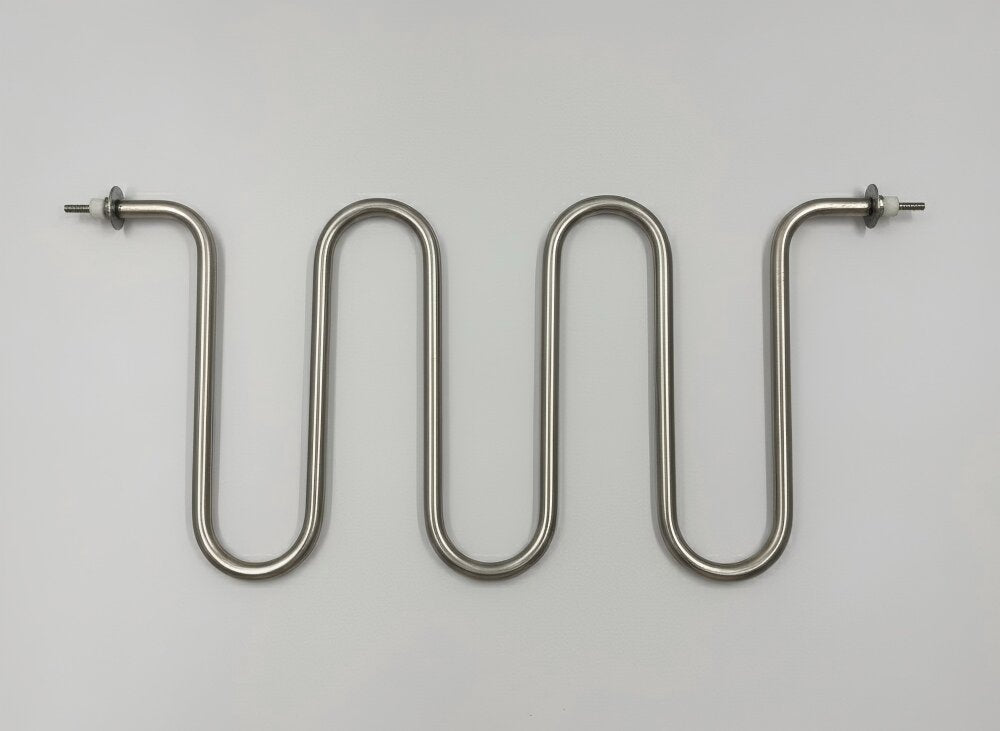
An oven heating tube—also called a heating element—is a device that converts electrical energy into heat. It uses specialized alloys and insulation materials to deliver consistent, efficient, and safe thermal output.
Modern ovens may use several types of heating tubes, depending on the cooking mode:
- Convection mode
- Grill / broil mode
- Fast-heating / infrared zones
- Steam-assist ovens
- Commercial bakery equipment
2. Main Types of Oven Heating Tubes
 2.1 Tubular Sheathed Heating Elements
Best for: Traditional ovens, commercial ovens
Material: Stainless steel 304/316/321
Insulation: High-purity magnesium oxide
Advantages:
- Excellent durability
- Uniform heat distribution
- High temperature resistance
- Long service life
This is the most common heating tube used in home and industrial ovens.
2.2 Mica Heating Elements
Best for: Compact ovens, toaster ovens, tabletop appliances
Advantages:
- Ultra-thin profile
- Fast thermal response
- Lightweight and space-saving
- Cost-effective
Sundear specializes in precision mica heaters with stainless steel casing for maximum reliability.
2.3 Quartz Infrared Heating Tubes
Best for: Broiler/grill function, rapid heating zones
Advantages:
- Heats up in seconds
- Ideal for browning and grilling
- High radiant efficiency
- Direct heat transfer
Infrared tubes are preferred in high-performance cooking and industrial food equipment.
2.4 Carbon Fiber Heating Tubes (Sundear Core Technology)
Best for: Radiant heating ovens, premium cooking appliances
Advantages:
- 30–40% higher energy efficiency
- Fast heat-up and stable infrared output
- Long lifespan compared to tungsten
- Lower watt density (safer & more efficient)
Carbon-fiber tubes are a growing trend in modern, energy-efficient ovens.
3. Key Engineering Factors That Influence Oven Performance
3.1 Material Quality
The durability and thermal stability of a heating tube depend on:
- Heating wire (Ni-Cr / Fe-Cr-Al)
- Sheath (SS304, SS321, Incoloy)
- Insulation purity (magnesium oxide or mica)
Premium materials reduce burnout and ensure stable heat transfer.
3.2 Watt Density & Heat Distribution
Overloaded watt density can cause failures; optimized heat distribution improves:
- Cooking uniformity
- Temperature accuracy
- Energy efficiency
At Sundear, each heating tube is calibrated to match your oven’s airflow and volume.
3.3 Safety & Compliance
High-quality heating elements comply with:
- UL
- CE
- VDE
- IEC standards
Safety involves:
- Dielectric strength
- Grounding integrity
- Overheat protection
3.4 Lifespan & Reliability Testing
Professional suppliers like Sundear run:
- 1000+ heating cycle tests
- Humidity & corrosion resistance tests
- Thermal shock tests
- Performance consistency checks
This ensures reliability for both household and commercial ovens.
4. Why Choose Sundear Heating Tubes?
✔ 30+ Years of Heating Element Expertise
We are one of the longest-established heating element manufacturers in China, trusted by global appliance brands.
✔ Full In-House Production
From wire winding to welding, sealing, testing, and final assembly—every process is controlled in-house for consistent quality.
✔ Advanced Materials & R&D
Our materials include high-purity magnesium oxide, premium Ni-Cr alloys, and durable carbon-fiber filaments.
✔ Custom OEM / ODM for Oven Manufacturers
We engineer heating tubes based on your oven size, temperature curve, and energy-efficiency targets.
✔ Global Certification Experience
UL • CE • SGS • RoHS • IEC
We help OEM partners meet export requirements for Europe, North America, and Asia.
5. How to Choose the Right Heating Tube for Your Oven
1. Indoor household oven
→ Tubular heater (top + bottom)
→ Optional infrared for grill mode
2. Commercial bakery oven
→ High-power tubular heaters
→ Moisture-resistant construction
3. Compact toaster oven
→ Mica heater or quartz tube
4. Premium smart oven
→ Carbon-fiber radiant heater
→ Low-watt-density efficiency design
5. Industrial cooking equipment
→ High-durability stainless steel tubular heaters
→ Reinforced terminals
If you are unsure, Sundear’s engineers can provide a technical selection guide based on your oven specification.
6. Conclusion
Oven heating tubes may look simple, but they are highly engineered components that define cooking performance, temperature stability, and long-term durability.
With over 30 years of specialization in carbon fiber heating tubes, mica heaters, tubular heaters, and infrared quartz tubes, Sundear Group delivers reliable, efficient heating solutions for global oven OEMs.